
Saturday, February 14, 2026
QR Code Loyalty Programs: How to Build One That Drives Repeat Business
What Is a QR Code Loyalty Program?
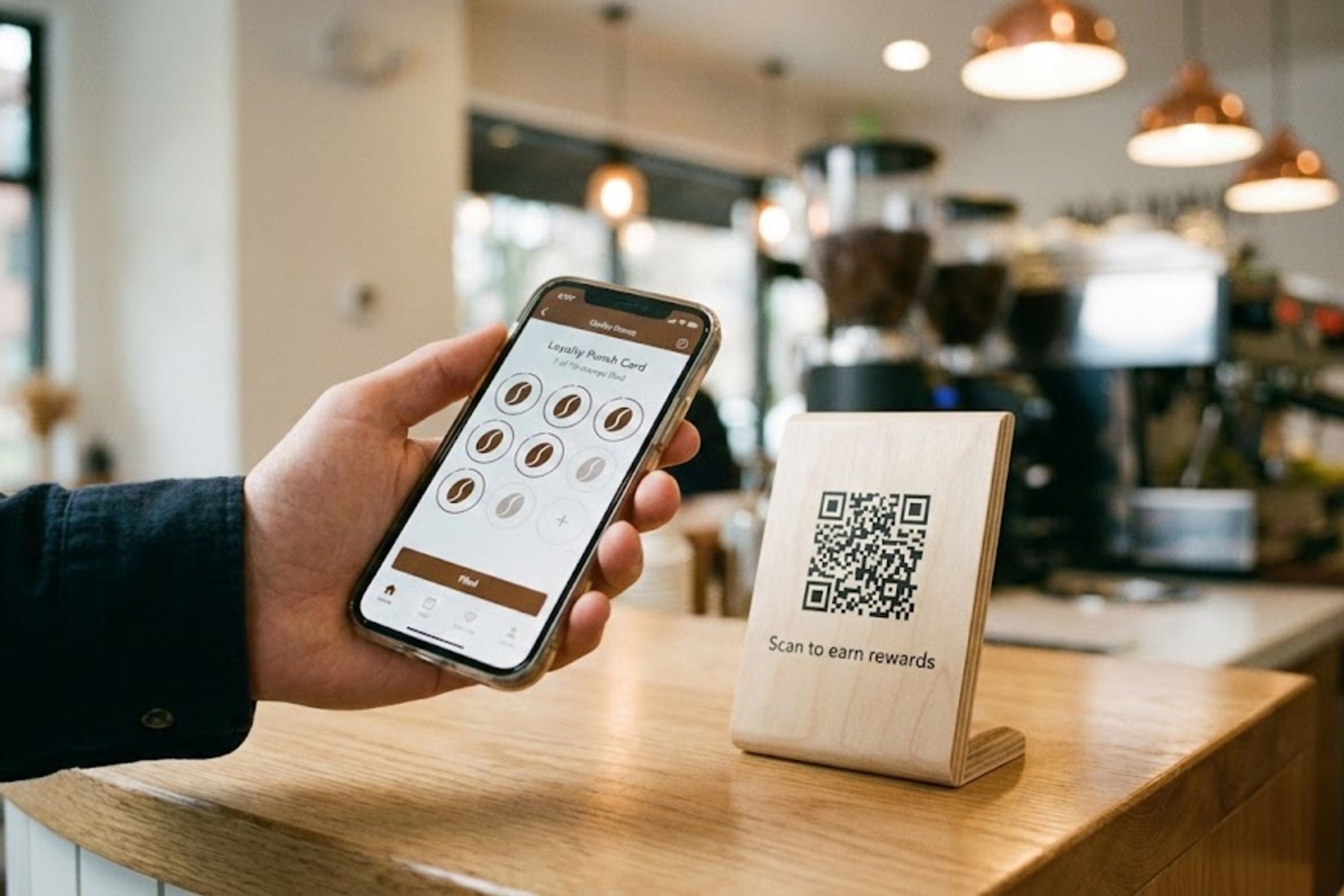
A QR code loyalty program replaces traditional punch cards and plastic loyalty cards with a scannable QR code. Customers scan a code at the point of sale to earn points, stamps, or rewards — all tracked digitally without downloading an app.
The QR code can be placed anywhere customers interact with your business: countertops, receipts, product packaging, email campaigns, and even flyers. When scanned, the code can link to a digital loyalty card that customers save to their phone, redirect to a web-based points tracker, or integrate with a dedicated loyalty app.
What makes QR codes ideal for loyalty programs is the use of dynamic QR codes. Unlike static codes, dynamic QR codes let you update the reward program — change point values, add new rewards, adjust tiers — without reprinting a single code.
Physical loyalty cards have a 60–80% abandonment rate. Customers lose them, forget them, or simply stop carrying them. Digital QR-based programs see 2–3× higher engagement because there’s nothing to carry and no app to download. Customers just scan and go.
Why Businesses Are Switching to QR Code Loyalty Programs
The shift from physical loyalty cards to QR-based programs isn’t just a tech trend — it solves real problems that business owners deal with every day.
No app download required. The single biggest friction point for traditional digital loyalty is asking customers to install an app. Most won’t bother. QR code loyalty programs bypass this entirely — customers scan with their phone camera, and they’re enrolled. No download, no account creation, no friction.
Lower cost than physical cards. Printing, distributing, and replacing plastic or paper loyalty cards adds up fast. A single dynamic QR code can be printed once and used for years because you can update the destination anytime.
Real-time analytics. Every scan generates data: when customers visit, how often they redeem, which locations drive the most engagement. This kind of insight is impossible with paper punch cards. With a QR code tracking dashboard, you see exactly how your program performs.
Instant program updates. Need to switch from "buy 10 get 1 free" to "earn 100 points for 20% off"? With a dynamic QR code, just update the linked page. No reprinting. No redistributing cards.
Multi-channel deployment. The same QR code works on in-store signage, receipts, product packaging, social media posts, email newsletters, and printed materials. One code, everywhere your customers are.
Higher engagement rates. Studies consistently show that digital loyalty programs see 2–3× higher participation than physical card programs. The convenience factor — scan, earn, forget about it until your reward is ready — drives adoption that physical cards simply can't match.
How Does a QR Code Loyalty Program Work?
Understanding the customer journey helps you design a program that actually gets used. Here's what happens from the moment a customer sees your QR code to the moment they redeem a reward.
Step 1: Customer Scans the QR Code. The customer uses their phone camera — no app needed — to scan the QR code at the register, on packaging, or from a receipt. The code opens a web page or digital loyalty card automatically.
Step 2: Customer Enrolls or Checks In. First-time customers enter basic info (name, email, or phone number) to create their loyalty profile. Returning customers simply scan to check in and log their visit or purchase.
Step 3: Points or Stamps Are Added. Each scan or qualifying purchase earns points, stamps, or progress toward a reward. The customer sees their updated balance immediately — no guessing how close they are to a free item.
Step 4: Customer Redeems Rewards. When the customer reaches the reward threshold, they redeem directly from their digital loyalty card. The business verifies through the same QR system — no paper coupons to print or track.
Step 5: Business Analyzes and Optimizes. On the backend, the business monitors dashboard analytics: total scans, redemption rates, visit frequency, and customer lifetime value. These insights drive program improvements over time.
The entire process is frictionless for the customer and data-rich for the business. That combination is why QR code loyalty programs consistently outperform physical card programs.
How to Set Up a QR Code Loyalty Program in 5 Steps
You don't need a big budget or a development team to launch a QR code loyalty program. Here's a practical walkthrough that works for any business size.
Step 1: Define Your Reward Structure
Before creating a single QR code, decide what customers earn and what they get. The three most common models are:
Model | How It Works | Best For | Example
Model: Stamp/Punch Card | How It Works: Earn 1 stamp per visit or purchase | Best For: Coffee shops, restaurants, salons | Example: Buy 10 coffees, get 1 free
Model: Points System | How It Works: Earn points per dollar spent | Best For: Retail stores, e-commerce | Example: 1 point per $1 — redeem 200 points for $20 off
Model: Tiered Program | How It Works: Unlock better rewards at higher levels | Best For: Gyms, subscription businesses | Example: Bronze → Silver → Gold with escalating perks
The stamp model is simplest to set up and easiest for customers to understand. The points model gives you more flexibility. Tiered programs drive the most long-term engagement but require more management. Pick the one that fits your business and your customers' habits.
Step 2: Choose Your QR Code Platform
You have two main approaches. First, dedicated loyalty platforms with built-in QR code functionality — options like Square Loyalty, Stamp Me, or LoyalZoo integrate directly with your POS system. Second, dynamic QR code generators paired with a landing page or Google Form. For small businesses, this second approach is often simpler, cheaper, and more flexible.
Step 3: Create Your Dynamic QR Code
Generate a dynamic QR code that points to your loyalty landing page. Dynamic is essential here — you need the ability to update the destination URL as your program evolves and track scan analytics to measure performance. A static QR code can't be updated or tracked, which makes it a poor fit for loyalty programs.
Step 4: Design and Place Your QR Code
Where you put the QR code matters as much as what it links to. The highest-performing placement locations are:
At the register or POS counter — this is where customers are already engaged and ready to interact. On receipts — captures post-purchase engagement when the transaction is fresh. On product packaging — builds brand loyalty beyond the in-store visit. In email newsletters — re-engages existing customers. On social media — acts as an acquisition channel for new loyalty members.
For print placements, make sure the QR code is at least 2cm × 2cm with a clear quiet zone around it. Add a call-to-action like "Scan to earn rewards" so customers know what the code does. For best practices on printed QR codes, see our guide on QR codes on flyers.
Step 5: Launch, Track, and Optimize
Once your program is live, monitor these early indicators: scan rate (are people actually scanning?), enrollment rate (are scanners signing up?), and visit frequency (are members coming back more often?). If scan rates are low, reposition the QR code to a more visible location. If enrollment drops off, simplify the sign-up process. If redemption rates are low, consider lowering the reward threshold.
QR Code Loyalty Program Ideas by Industry
Every business type can benefit from a QR loyalty program, but the approach should match your customers' habits. Here are specific program designs that work for six industries.
Restaurants and Cafes
Program: Scan the QR code on your receipt after every meal. Earn 1 stamp per visit — after 10 visits, get a free entrée.
Restaurants see some of the highest loyalty scan rates because the QR code is in front of customers while they're already engaged — waiting for food, paying the bill, or browsing the menu QR code. Place the code on table tents and receipts for maximum visibility.
Coffee Shops
Program: Classic digital punch card — buy 9 coffees, get the 10th free.
This is the most natural QR loyalty use case. The code replaces the physical stamp card that customers always lose. Place it at the register with a clear "Scan to Earn Your Free Coffee" call to action. Simplicity is key — customers want a quick scan, not a complicated sign-up flow.
Retail Stores
Program: Earn 1 point per $1 spent. Redeem 200 points for a $20 gift card.
Use product packaging QR codes for ongoing engagement beyond the in-store visit. Print the loyalty QR code on shopping bags so customers scan at home and enroll for future purchases. For multi-location retailers, a single dynamic QR code can serve all stores while tracking location-specific data.
Hair Salons and Spas
Program: Book 5 appointments through the QR code, get 20% off your 6th visit.
Add the QR code to appointment confirmation emails and the salon mirror — customers see it during every visit. Service businesses benefit most from visit-frequency rewards because the repeat-purchase cycle is naturally regular.
Gyms and Fitness Studios
Program: Scan the QR code at check-in. Hit 20 visits this month for a free personal training session.
Place QR codes at the front desk and on gym equipment. Fitness loyalty programs drive retention — members who engage with rewards programs are significantly less likely to cancel their memberships.
E-commerce and Online Stores
Program: Scan the QR code inside your package to earn points toward your next order.
Include the QR code on a card insert inside shipped packages. This bridges the physical-digital gap for online retailers and gives customers a tangible reason to return. The code links to a URL-based loyalty page where they can track their points.
Best Tools for Creating a QR Code Loyalty Program
No competitor in this space offers a neutral comparison of platforms, so here's an honest breakdown of the best options.
Platform | Type | Free Tier | Best For | Key Feature
Platform: UseQRKit | Type: Dynamic QR generator | Free Tier: Yes (free QR codes) | Best For: Small businesses wanting full control | Key Feature: Dynamic codes with analytics, no app needed
Platform: Square Loyalty | Type: POS-integrated loyalty | Free Tier: Yes (basic) | Best For: Retail and restaurants already using Square | Key Feature: Built into POS system, automatic enrollment
Platform: Stamp Me | Type: Dedicated loyalty app | Free Tier: Free trial | Best For: Multi-location businesses | Key Feature: Branded app, push notifications
Platform: LoyalZoo | Type: POS loyalty plugin | Free Tier: Paid only | Best For: Businesses using Clover or Lightspeed POS | Key Feature: POS integration, automated rewards
Platform: DIY (Google Forms + QR) | Type: Manual setup | Free Tier: Free | Best For: Very small businesses testing loyalty | Key Feature: Zero cost, maximum flexibility, no analytics
For most small businesses, a dynamic QR code from QRKit paired with a simple landing page is the fastest way to launch. You get scan analytics, the ability to update the destination anytime, and you're not locked into a specific POS system or loyalty platform. If you later decide to switch to a dedicated loyalty app, just update the QR code's destination — no reprinting needed.
5 Mistakes That Kill QR Code Loyalty Programs
Even a well-designed loyalty program can fail if you make one of these common errors.
1. Using static QR codes. Static codes can't be updated or tracked. If you need to change your reward structure, update the landing page, or monitor scan analytics, a static code forces you to reprint everything. Always use dynamic QR codes for loyalty programs. Not sure about the difference? Read our static vs dynamic QR code guide.
2. Placing QR codes where no one scans. A code hidden on a back wall or printed too small on a receipt gets ignored. Place codes at eye level, at the point of sale, and anywhere customers naturally pause — tables, mirrors, checkout counters.
3. Making the reward too hard to earn. If customers need 50 visits to earn a small discount, they'll abandon the program within weeks. Set achievable thresholds — most successful programs use a 10–15 interaction cycle to the first reward.
4. Not tracking scan analytics. Without data, you're flying blind. Track scan frequency, time of day, location, and redemption rates. If scans drop, you need to know immediately so you can adjust placement or messaging.
5. Ignoring QR code expiration risks. If you use a free QR code generator with scan limits or subscription dependencies, your loyalty codes could stop working mid-campaign. Choose a provider with reliable uptime and no hidden expiration. For more on this, see do QR codes expire.
How to Measure Your QR Code Loyalty Program's Success
Launching is just the beginning. Here are the six metrics that tell you whether your program is working.
Scan Rate — Total QR code scans divided by total customers exposed. A healthy target is 15–25% for in-store placements. Below 10% means the code isn't visible enough or the call-to-action isn't compelling.
Enrollment Rate — New loyalty members divided by total scans. If scan rate is high but enrollment is low, your sign-up form has too much friction. Simplify it.
Redemption Rate — Rewards redeemed divided by rewards earned. The industry average for digital loyalty programs is 13–15%. Below 10% suggests the reward isn't compelling enough or the threshold is too high.
Visit Frequency — Average visits per loyalty member per month. Compare loyalty members to non-members to quantify the program's actual impact on repeat business.
Customer Lifetime Value (CLV) Uplift — Revenue from loyalty members versus non-members over 12 months. Successful QR code loyalty programs typically increase CLV by 20–30%.
Program ROI — Revenue from loyalty members minus program costs, divided by program costs. Include your QR code platform subscription, printing costs, and reward fulfillment costs. Most QR-based programs achieve positive ROI within 2–3 months because the operating costs are minimal.
Frequently Asked Questions About QR Code Loyalty Programs
How much does a QR code loyalty program cost?
Costs range from completely free to $50–200 per month depending on your approach. You can create a QR code loyalty program for free using a dynamic QR code generator like QRKit paired with a simple landing page or Google Form. Dedicated loyalty platforms like Square Loyalty or Stamp Me charge monthly fees but offer more automation and built-in features. The QR code creation itself is typically free — the cost comes from the loyalty platform or landing page hosting.
Can I create a QR code loyalty program for free?
Yes. Use a free dynamic QR code generator paired with a simple landing page, Google Form, or even a Google Sheets tracker. Free options work well for small businesses testing the loyalty program concept before committing to a paid platform. You get scan tracking with dynamic QR codes, which gives you the data you need to decide if scaling up makes sense.
What is the best QR code loyalty program for small businesses?
For most small businesses, a dynamic QR code linking to a simple digital loyalty card is the easiest and most cost-effective approach. No app downloads required from customers, no expensive platform subscription, and no POS integration to configure. UseQRKit's free tier lets you create dynamic QR codes with built-in analytics — enough to launch and test a loyalty program before investing further.
Do QR code loyalty programs work without an app?
Yes, and that's their biggest advantage over traditional digital loyalty programs. Customers scan the QR code with their phone camera, which opens a web-based loyalty page directly in the browser. No app download, no app store search, no storage space used on the customer's phone. This zero-friction approach is why QR code loyalty programs achieve higher adoption rates than app-based alternatives.
How do customers use a QR code loyalty program?
The customer scans the QR code with their phone camera at the point of sale. This opens their digital loyalty card in the browser, where points or stamps are tracked automatically. The customer can see their progress toward the next reward in real time. When they reach the threshold, they redeem directly from their phone — no paper coupons or separate steps needed.
What's the difference between a QR code loyalty program and a loyalty app?
A QR code loyalty program uses a scannable code that opens a web page — no app download needed. A loyalty app requires customers to find, download, and install software from an app store. QR code programs have significantly lower friction and higher adoption rates because the barrier to entry is essentially zero: point your camera, scan, done.
Can I track how many people use my QR code loyalty program?
Yes, if you use dynamic QR codes. Dynamic codes provide scan analytics including total scans, unique scans, time of scan, location, and device type. You can see exactly who's engaging with your program and when. Static QR codes don't offer any tracking at all, which is why they're not recommended for loyalty programs.
Do QR code loyalty program codes expire?
Dynamic QR codes remain active as long as your subscription with the QR code provider is active. They don't have a built-in expiration date. Static QR codes technically never expire, but they also can't be tracked or updated. The key is choosing a reliable provider so your loyalty program QR codes keep working for years. For a detailed breakdown, read our guide on whether QR codes expire.
What types of businesses benefit most from QR code loyalty programs?
Restaurants, coffee shops, retail stores, salons, gyms, and e-commerce brands see the strongest results. Essentially, any business with repeat customers and a physical or digital touchpoint where a QR code can be placed will benefit. The model works especially well for businesses with a regular purchase cycle — weekly coffee runs, monthly haircuts, seasonal shopping.
Can I change my loyalty reward structure after printing the QR code?
Yes — if you use a dynamic QR code. Dynamic codes let you change the destination URL without reprinting the physical code. So you can update your loyalty page to reflect new rewards, modified point values, or restructured tiers at any time. This flexibility is one of the strongest arguments for choosing dynamic over static QR codes for any loyalty program.